


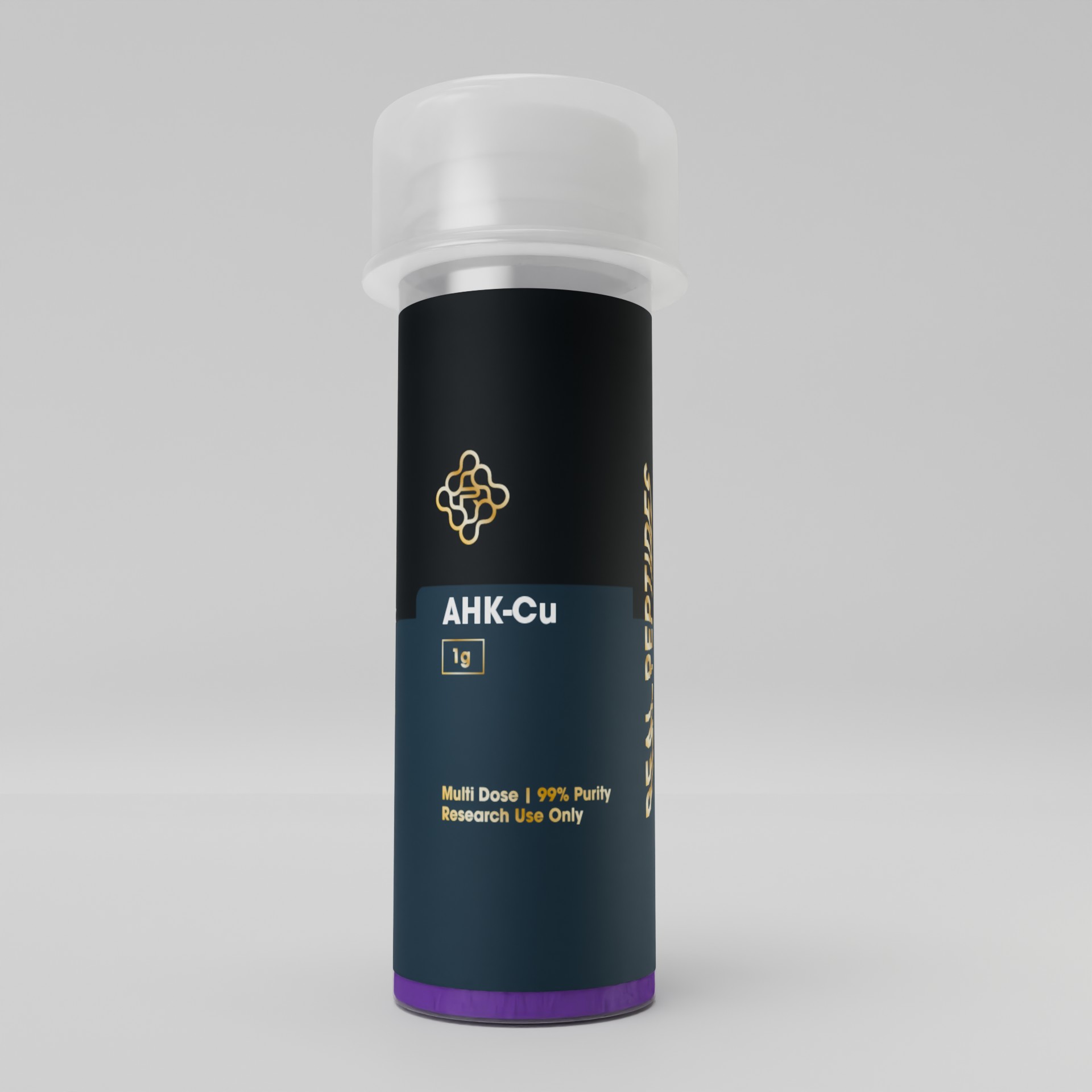
Buy AHK-Cu Peptide | Copper Tripeptide-1 for Skin & Hair Research
Buy AHK-Cu Peptide (Copper Tripeptide-1) online from a trusted research peptide supplier offering laboratory-grade compounds for scientific and cosmetic investigation. AHK-Cu is a copper-binding peptide complex widely referenced in experimental research related to skin biology, hair follicle signaling, tissue repair pathways, and cellular regeneration mechanisms.
In modern cosmetic science and molecular biology research, copper peptides such as AHK-Cu are frequently examined for their interaction with cellular signaling pathways, extracellular matrix regulation, and gene expression systems associated with dermal and follicular tissues.
Because of its involvement in collagen production, skin tissue signaling, and hair follicle activity, AHK-Cu has become a commonly referenced compound in cosmetic peptide research, dermatological studies, peptide chemistry, and cellular biology investigations.
AHK-Cu Peptide is available to purchase online strictly for laboratory research and cosmetic formulation investigation. Each batch is synthesized using controlled peptide production techniques and packaged to support professional research laboratories and formulation environments.
This compound is supplied for research and cosmetic formulation purposes only and is not intended for human consumption, medical treatment, veterinary use, or diagnostic applications.
What Is AHK-Cu Peptide?
AHK-Cu (Alanine-Histidine-Lysine Copper) is a copper-binding tripeptide complex studied in laboratory environments exploring skin regeneration pathways, hair follicle cell signaling, and connective tissue biology.
The peptide consists of a short chain of three amino acids:
- Alanine
- Histidine
- Lysine
When bound to copper ions, this tripeptide forms a stable copper peptide complex capable of interacting with biological signaling systems involved in tissue repair and cellular communication.
Copper ions are essential trace elements involved in several important biological processes including:
- Enzyme activation
- Cellular metabolism
- Connective tissue formation
- Antioxidant defense systems
Copper peptides therefore attract scientific interest because they may influence cell signaling networks and structural protein regulation within tissues.
In laboratory research, AHK-Cu is frequently studied in relation to biological processes such as:
- Skin tissue regeneration signaling
- Hair follicle cellular activity
- Collagen and extracellular matrix regulation
- Cellular communication pathways
- Gene expression related to tissue repair mechanisms
Because these biological systems are essential for maintaining tissue structure and function, AHK-Cu appears in multiple areas of cosmetic science and dermatological research.
Molecular Structure and Biological Characteristics
AHK-Cu is classified as a tripeptide copper complex, meaning it consists of a short peptide sequence combined with a copper ion.
The peptide portion contains three amino acids:
- Alanine
- Histidine
- Lysine
Histidine plays a particularly important role because its imidazole side chain has strong metal-binding properties, allowing the peptide to bind copper ions and form a stable molecular complex.
Copper ions themselves are important cofactors for numerous biological enzymes involved in:
- Cellular respiration
- Antioxidant enzyme activity
- Connective tissue formation
- Structural protein stabilization
When combined with peptides, copper ions may participate in cell signaling pathways and molecular communication networks within tissues.
These interactions make copper peptides an important topic in biochemical and cosmetic research fields.
Research Areas Involving AHK-Cu Peptide
AHK-Cu appears in several scientific research areas related to skin regeneration, hair follicle biology, extracellular matrix regulation, and molecular tissue repair signaling.
Below are the most common research fields where this peptide is studied.
Skin Biology and Regeneration Research
Skin is the largest organ of the human body and plays a crucial role in barrier protection, hydration balance, and tissue repair mechanisms.
Laboratory research involving AHK-Cu often focuses on molecular pathways associated with:
- Skin cell regeneration
- Dermal tissue repair signaling
- Cellular communication between fibroblasts and epidermal cells
Fibroblasts are specialized cells responsible for producing collagen, elastin, and extracellular matrix components that maintain skin structure.
Understanding how signaling molecules influence these cells is a major focus of cosmetic dermatology research.
Peptides such as AHK-Cu may appear in studies examining how cellular signaling networks regulate skin repair and regeneration processes.
Collagen and Extracellular Matrix Research
The extracellular matrix (ECM) is the structural framework that supports cells within tissues.
Important ECM components include:
- Collagen fibers
- Elastin fibers
- Glycoproteins
- Structural proteins
These components help maintain tissue strength, elasticity, and structural stability.
Scientific studies frequently investigate peptides that may influence collagen production and extracellular matrix signaling pathways.
Because structural proteins play such a central role in skin integrity, ECM research remains an important focus within dermatological science and connective tissue biology.
Hair Follicle Biology Research
Hair follicles are complex biological structures responsible for hair growth and regeneration.
Each follicle undergoes a continuous cycle consisting of three phases:
- Anagen (growth phase)
- Catagen (transition phase)
- Telogen (resting phase)
Laboratory research involving AHK-Cu often examines molecular signaling pathways that influence hair follicle cell activity and growth cycle regulation.
Researchers may study how peptides interact with dermal papilla cells, specialized cells located at the base of hair follicles that help regulate follicle growth and signaling.
Hair biology research is an important area within cosmetic science and dermatological studies.
Tissue Repair and Cellular Signaling Studies
Cells rely on complex communication systems to respond to injury and environmental stress.
When tissue damage occurs, several biological processes are activated, including:
- Cellular migration
- Inflammatory response signaling
- Tissue remodeling mechanisms
Researchers studying peptides often investigate how signaling molecules influence communication between immune cells, fibroblasts, and structural tissue components.
Understanding these processes helps scientists explore how tissues coordinate repair and regeneration mechanisms.
Antioxidant and Cellular Stress Research
Cells are constantly exposed to environmental stressors that can generate reactive oxygen species (ROS).
Excess ROS can influence cellular stability and lead to oxidative stress.
Laboratory studies frequently examine how biological compounds interact with cellular antioxidant defense systems.
Copper ions play an important role in several antioxidant enzymes, including:
- Superoxide dismutase (SOD)
- Catalase
- Other oxidative stress defense proteins
Because of copper’s role in enzyme activity, copper-binding peptides such as AHK-Cu are often studied in research related to cellular stress responses and antioxidant signaling pathways.
Cosmetic Science and Peptide Formulation Research
Peptides have become popular ingredients in modern cosmetic formulations due to their potential role as cell signaling molecules.
Cosmetic researchers frequently examine peptides for their interaction with skin cells and extracellular matrix signaling pathways.
AHK-Cu may appear in formulation research investigating:
- Peptide stability in topical skincare products
- Interaction with dermal cell receptors
- Skin penetration characteristics
- Compatibility with cosmetic ingredients
These studies support innovation in cosmetic chemistry and skincare product development.
Laboratory Quality and Purity Standards
Researchers and formulation scientists require peptides that meet high analytical purity standards.
AHK-Cu Peptide is synthesized using controlled peptide production techniques and undergoes analytical verification to ensure structural accuracy and purity.
Quality control procedures typically include:
- Controlled peptide synthesis protocols
- Analytical purity verification
- Structural confirmation using laboratory analysis methods
- Secure packaging for laboratory handling
- Batch traceability for research documentation
Maintaining strict quality standards helps ensure reproducibility in experimental research and formulation studies.
Each unit is sealed and labeled to support safe laboratory handling procedures and compound traceability.
Why Researchers Buy AHK-Cu Peptide Online
Research laboratories and cosmetic formulation specialists often obtain peptides through specialized suppliers that provide consistent access to laboratory research compounds.
Ordering research peptides online allows laboratories to:
- Access verified laboratory-grade peptides
- Maintain supply for ongoing research projects
- Review compound specifications and documentation
- Receive secure packaging for laboratory transport
Reliable sourcing is important for maintaining continuity in long-term research programs investigating peptide signaling pathways.
Product Specifications
| Specification | Details |
|---|---|
| Product Name | AHK-Cu Peptide |
| Form | Lyophilized peptide powder |
| Purity | Analytical laboratory grade |
| Category | Copper peptide complex |
| Research Focus | Skin biology, hair follicle signaling, tissue regeneration |
| Packaging | Sealed research vial |
| Storage | Controlled laboratory refrigeration recommended |
| Intended Use | Laboratory research and cosmetic formulation only |
Global Research Availability
AHK-Cu Peptide is available for purchase online for qualified research professionals and cosmetic laboratories worldwide.
Distribution networks support research communities across:
- North America
- Europe
- Asia-Pacific research markets
- Middle Eastern laboratory sectors
- Selected African research institutions
Import regulations governing research compounds vary between jurisdictions. Buyers are responsible for ensuring compliance with local research chemical regulations before placing orders.
Frequently Asked Questions
What is AHK-Cu peptide used for in research?
AHK-Cu appears in laboratory research investigating skin regeneration signaling, collagen regulation, hair follicle biology, and tissue repair mechanisms.
Is AHK-Cu approved for therapeutic use?
No. AHK-Cu Peptide is supplied strictly for research and cosmetic formulation purposes and is not approved for medical or therapeutic use.
What form is AHK-Cu supplied in?
The compound is typically supplied as a lyophilized peptide powder in a sealed research vial suitable for laboratory use.
Which scientific fields reference AHK-Cu?
AHK-Cu appears in research connected with:
- Cosmetic science
- Dermatological biology
- Peptide chemistry
- Molecular biology
- Tissue regeneration research
How is peptide purity verified?
Research peptides are commonly analyzed using chromatographic and spectrometric laboratory techniques to confirm structural accuracy and purity.
Research Use Disclaimer
AHK-Cu Peptide is intended for laboratory research and cosmetic formulation purposes only.
This compound is not intended for human ingestion, medical treatment, veterinary use, or diagnostic applications.
Handling should be performed by trained professionals in properly equipped laboratory environments.
Purchasers are responsible for ensuring compliance with applicable research and cosmetic regulations.
References
Pickart, L. (2008). The human tripeptide GHK and tissue remodeling. Journal of Biomaterials Science.
Pickart, L., & Margolina, A. (2018). Regenerative and protective actions of copper peptides. International Journal of Molecular Sciences.
Research overview: AHK-Cu is a copper-binding tripeptide studied in laboratory research involving skin biology, hair follicle signaling, extracellular matrix regulation, and tissue repair mechanisms.
Be the first to review “Buy AHK-Cu Peptide | Copper Tripeptide-1 for Skin”
Related products

Gut Health & Regenerative
Gut Health & Regenerative

Gut Health & Regenerative
Buy GHK-Cu Peptide 50 mg | Skin, Hair & Tissue-Repair Research Peptide
Gut Health & Regenerative

Gut Health & Regenerative
Buy Cartalax Peptide Online | Cartilage Research & Tissue Support Studies
Gut Health & Regenerative
Buy GHK-Cu Cosmetic Peptide Online | Skin Rejuvenation & Anti-Aging Research
Gut Health & Regenerative
Reviews
There are no reviews yet.