


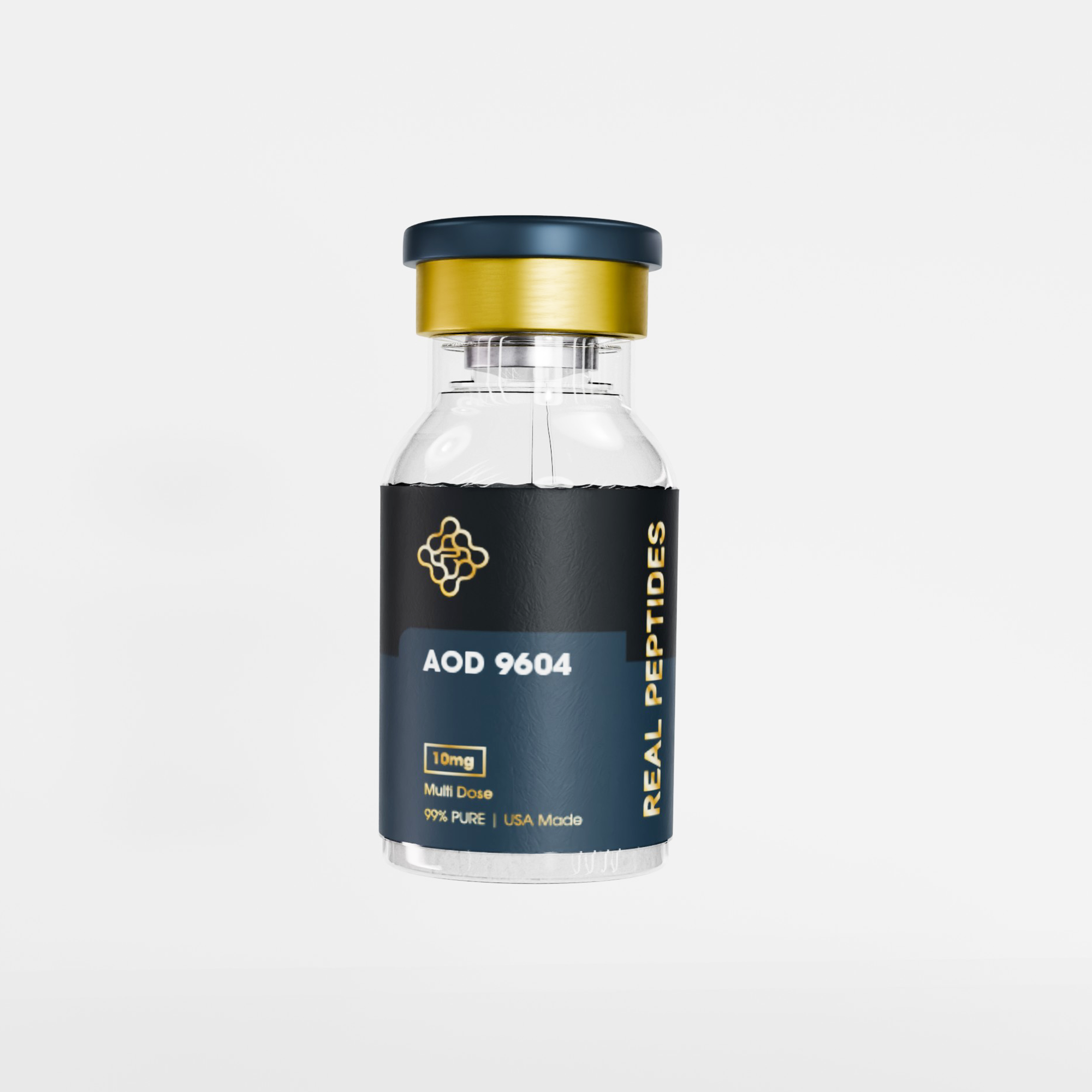
Buy AOD-9604 Peptide | Metabolic & Adipose Tissue Research Peptide
Product Overview – AOD-9604 Peptide
AOD-9604 peptide is a synthetic peptide fragment derived from the C-terminal region of the human growth hormone (hGH) sequence. Specifically, the peptide corresponds to residues 176–191 of the growth hormone molecule. This short peptide fragment has been widely studied in laboratory settings for its potential role in metabolic signaling pathways and adipose tissue biology.
In molecular biology and metabolic research, peptide fragments are often investigated to understand how specific regions of larger proteins influence biological pathways. AOD-9604 is one such fragment that researchers use to evaluate the structure–function relationship of growth hormone derivatives and their interactions with cellular systems.
Unlike full-length hormones, peptide fragments allow scientists to isolate specific molecular mechanisms and determine whether certain biological effects can occur independently of the parent molecule. For this reason, AOD-9604 has become a topic of interest in metabolic research, adipocyte signaling studies, and hormone fragment bioactivity investigations.
Laboratories exploring the regulation of lipid metabolism, metabolic homeostasis, and adipose tissue signaling frequently analyze peptides like AOD-9604 to better understand the molecular pathways involved in metabolic regulation.
AOD-9604 is typically supplied as a lyophilized peptide powder, which preserves its structural stability and ensures reliable preparation for laboratory experiments. The lyophilized format allows researchers to maintain peptide integrity during storage and transport while minimizing degradation.
Due to its defined amino acid sequence and consistent molecular structure, AOD-9604 provides researchers with a controlled experimental compound for studying peptide signaling pathways and metabolic cellular processes.
Molecular Structure and Peptide Characteristics
Understanding the structural properties of AOD-9604 is essential for researchers investigating its biological interactions.
Peptide Classification
AOD-9604 belongs to the class of synthetic peptide fragments derived from hormone sequences. These fragments are commonly used in research to evaluate how smaller segments of larger proteins influence cellular pathways.
Amino Acid Sequence
The peptide corresponds to the 176–191 fragment of human growth hormone, which represents a region of the hormone associated with metabolic signaling activity in various experimental models.
This fragment contains 16 amino acids, forming a compact peptide structure that allows researchers to investigate receptor interactions and molecular signaling pathways without using the full hormone molecule.
Structural Properties
Peptides like AOD-9604 are valued in research because they offer:
- Defined molecular weight and sequence
- High reproducibility in experimental settings
- Targeted structure–function analysis
- Controlled interactions with cellular signaling pathways
These features allow scientists to analyze the biological relevance of specific hormone fragments in a precise and controlled manner.
Mechanism of Action – Research Context
In experimental research models, AOD-9604 has been studied for its potential influence on metabolic signaling pathways related to adipose tissue and lipid metabolism.
Researchers investigating hormone fragments often explore whether specific sequences can interact with receptors or intracellular signaling systems in ways that differ from the parent hormone molecule.
Studies involving AOD-9604 typically examine:
Metabolic Signaling Pathways
Laboratory experiments may investigate how peptide fragments interact with cellular pathways involved in metabolic regulation. Researchers analyze peptide–receptor interactions and intracellular signaling responses to determine how molecular fragments influence biological processes.
Adipocyte Cellular Models
AOD-9604 is sometimes evaluated in cell culture models involving adipocytes, the cells responsible for storing lipids in adipose tissue. These studies help researchers understand how peptides influence signaling pathways related to adipose tissue biology.
Hormone Fragment Activity
By isolating a specific region of the growth hormone sequence, scientists can examine whether biological activity occurs independently of the full hormone molecule. This approach allows researchers to determine the functional significance of individual peptide segments.
Cellular Metabolism Studies
In metabolic biology, peptide fragments may be analyzed for their potential role in regulating cellular energy pathways and lipid metabolism signaling networks.
These studies contribute to a broader understanding of how peptide fragments interact with metabolic systems at the cellular level.
Research Applications of AOD-9604
Peptides such as AOD-9604 are commonly used in laboratory environments studying metabolic and molecular biology processes.
Adipose Tissue Biology Research
Adipose tissue is an active metabolic organ that plays a role in energy storage and endocrine signaling. Researchers studying adipocyte function often investigate peptide signaling pathways that influence adipose tissue activity.
Lipid Metabolism Studies
Metabolic researchers examine how different molecules interact with pathways involved in lipid storage, mobilization, and metabolic regulation.
Peptide fragments derived from hormones provide useful tools for evaluating these pathways in controlled experimental systems.
Hormone Fragment Structure–Function Research
AOD-9604 is frequently studied as part of structure–function analyses of hormone-derived peptides. By examining individual segments of larger proteins, scientists can determine which regions are responsible for specific biological activities.
Cellular Signaling Investigations
Many metabolic pathways involve complex signaling networks between receptors, enzymes, and regulatory proteins. Peptides such as AOD-9604 are used in experimental models to evaluate how signaling molecules interact with these systems.
Molecular Biology and Peptide Chemistry
Researchers interested in peptide design, synthetic biology, and peptide chemistry may also analyze AOD-9604 as a model peptide for studying the properties of hormone fragments.
Advantages of Lyophilized Peptide Format
Most research peptides are supplied in lyophilized form, including AOD-9604.
Lyophilization is a freeze-drying process that removes moisture from the peptide solution while preserving the molecular structure. This method offers several advantages for laboratory research.
Improved Stability
Removing water from the peptide formulation helps prevent hydrolysis and other degradation reactions that can occur during storage.
Extended Shelf Life
Lyophilized peptides remain stable for longer periods compared with liquid peptide solutions.
Reliable Experimental Preparation
Researchers can reconstitute lyophilized peptides using sterile laboratory solutions according to their experimental protocols.
Reduced Transport Risk
The dry powder format helps protect the peptide during transportation and minimizes temperature-related degradation.
These advantages make lyophilization the preferred format for research peptide distribution and laboratory use.
Laboratory Handling and Storage Guidelines
Proper handling and storage are essential for maintaining peptide stability and ensuring reliable experimental outcomes.
Storage Conditions
Researchers typically store AOD-9604 under refrigerated conditions:
- Temperature: 2–8 °C (36–46 °F)
- Protect from direct light exposure
- Avoid prolonged exposure to heat
Maintaining a stable temperature environment helps prevent structural degradation of the peptide.
Handling Precautions
When preparing peptide solutions for experimental use, laboratory personnel should follow standard sterile handling procedures.
Recommended practices include:
- Use sterile laboratory equipment
- Avoid repeated freeze–thaw cycles
- Prepare solutions under controlled laboratory conditions
- Store reconstituted solutions according to experimental protocols
These practices help preserve peptide integrity and ensure reproducible research results.
Importance of Peptide Research in Metabolic Science
Peptide research has become an important area of study in modern molecular biology and metabolic science.
Peptides are short chains of amino acids that often function as signaling molecules within biological systems. Many hormones, neurotransmitters, and regulatory proteins operate through peptide-based mechanisms.
By studying synthetic peptide fragments such as AOD-9604, scientists can gain insight into how specific molecular sequences influence biological processes.
Understanding Hormone Fragment Activity
Large proteins and hormones often contain multiple functional regions. Researchers analyze these regions individually to determine which segments contribute to biological activity.
This type of research helps scientists understand:
- Protein structure and function
- Molecular signaling pathways
- Receptor interactions
- Metabolic regulatory mechanisms
Advancing Molecular Biology Knowledge
Research peptides also play a role in advancing fundamental knowledge about cellular biology. Experiments involving peptide fragments help scientists develop new hypotheses about metabolic regulation and cellular communication.
Applications in Experimental Biology
Peptide research contributes to multiple areas of biological science, including:
- endocrinology
- metabolic biology
- molecular pharmacology
- cellular signaling research
These studies form the foundation for understanding complex biological systems.
Quality and Purity in Research Peptides
High-quality peptides are essential for reliable laboratory research.
When sourcing research peptides, laboratories typically consider several important factors.
Peptide Purity
High purity levels ensure that experimental outcomes are not influenced by contaminants or impurities.
Analytical Verification
Quality peptides are often verified using analytical methods such as:
- High-performance liquid chromatography (HPLC)
- Mass spectrometry
These techniques confirm peptide identity and purity.
Consistency Between Batches
Reliable suppliers maintain consistent manufacturing standards to ensure reproducibility across research experiments.
Proper Packaging
Packaging plays an important role in protecting peptides from environmental factors such as moisture, heat, and light.
Maintaining high quality standards helps ensure that peptides remain suitable for scientific research applications.
Frequently Asked Questions – AOD-9604 Research Peptide
What is AOD-9604 peptide?
AOD-9604 is a synthetic peptide corresponding to residues 176–191 of the human growth hormone sequence. It is studied in laboratory environments for its potential role in metabolic and adipose tissue signaling research.
What type of research uses AOD-9604?
Researchers investigating metabolic signaling pathways, adipose tissue biology, and hormone fragment bioactivity may use AOD-9604 in experimental models.
Why are hormone fragments studied in research?
Studying fragments of larger proteins allows scientists to isolate specific regions of a molecule and determine their biological significance.
How is AOD-9604 supplied?
The peptide is typically supplied as a lyophilized powder, which preserves structural stability and facilitates laboratory preparation.
How should AOD-9604 be stored?
To maintain peptide integrity, it should be stored under refrigerated conditions and protected from heat, light, and moisture.
Is AOD-9604 approved for medical use?
No. AOD-9604 is intended strictly for laboratory research purposes and is not approved for medical, diagnostic, or therapeutic use.
Important Research Disclaimer
AOD-9604 is provided exclusively for laboratory research purposes.
- Not intended for human consumption
- Not intended for medical or therapeutic use
- Not approved by regulatory authorities for human use
The compound should only be handled by qualified researchers in controlled laboratory environments.
Be the first to review “Buy AOD-9604 Peptide | Metabolic & Adipose Tissue Research Peptide”
Related products

Sleep Support

Sleep Support

Hormone & GH Research
Buy GHRP-6 Peptide Online | GHRP6 for Pulsatile GH Release & Anabolic Research
Hormone & GH Research
Buy Hexarelin Peptide 5 mg | Hexarelin for GH-Axis & Cardiovascular Research

Hormone & GH Research
Hormone & GH Research
Hormone & GH Research

Sleep Support
Reviews
There are no reviews yet.