


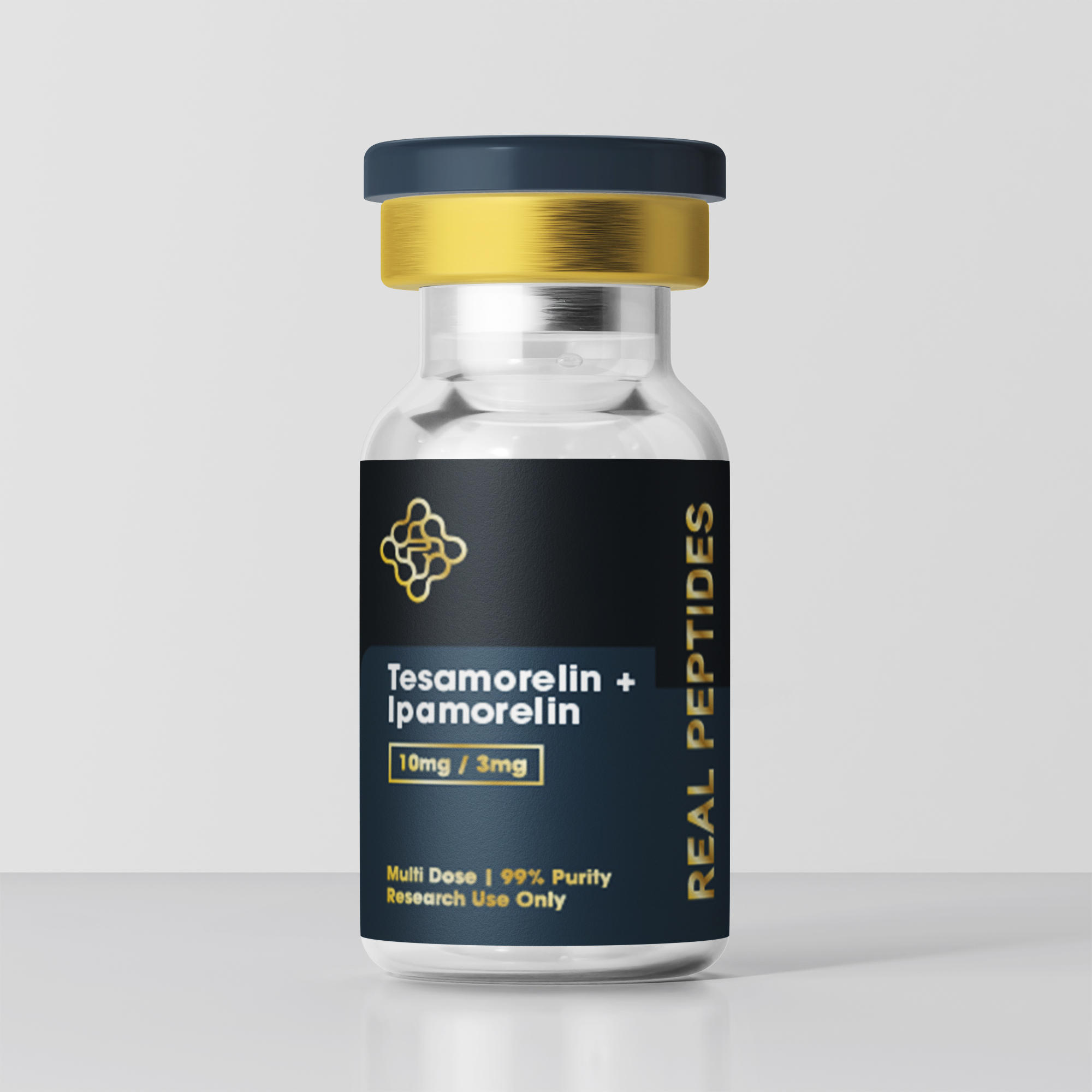
Below is a long-form SEO product page structure (~3500+ words) for the product:
Buy Tesamorelin & Ipamorelin Peptide Blend | Growth Hormone Peptide Stack
It is optimized for on-page SEO, includes focus keyword placement, headings, FAQ schema section, and rich content sections.
Buy Tesamorelin & Ipamorelin Peptide Blend | Growth Hormone Peptide Stack
Introduction to Tesamorelin & Ipamorelin Peptide Blend
Peptide-based research compounds have gained significant attention in the fields of metabolic science, endocrinology, and growth hormone signaling. Among the most studied combinations is the Tesamorelin & Ipamorelin Peptide Blend, a dual peptide formulation designed to support advanced research into growth hormone release, fat metabolism, and metabolic regulation.
Researchers investigating growth hormone pathways frequently study peptide stacks because combining peptides can allow scientists to observe how multiple signaling pathways interact simultaneously. The Tesamorelin & Ipamorelin Peptide Blend is particularly interesting in this context because it combines two peptides that influence growth hormone activity through different mechanisms.
Tesamorelin functions primarily as a growth hormone–releasing hormone analog, stimulating the pituitary gland to produce growth hormone. Ipamorelin, on the other hand, belongs to a class of peptides known as growth hormone secretagogues, which stimulate the ghrelin receptor to promote growth hormone release.
When studied together, the Tesamorelin & Ipamorelin Peptide Blend provides researchers with an opportunity to explore how these two mechanisms interact to influence growth hormone signaling, metabolic pathways, and body composition regulation.
Because growth hormone plays an important role in metabolism, fat utilization, and cellular repair, peptides that influence this pathway continue to be a major focus in scientific research.
Understanding Growth Hormone Peptides
Growth hormone peptides are short chains of amino acids designed to interact with receptors that regulate the release of growth hormone from the pituitary gland.
Growth hormone itself plays an essential role in many physiological processes, including:
- cellular growth and repair
- fat metabolism
- protein synthesis
- energy metabolism
- tissue regeneration
Because growth hormone production naturally declines with age, researchers often study compounds capable of stimulating growth hormone secretion.
The Tesamorelin & Ipamorelin Peptide Blend represents a modern approach to studying these mechanisms by combining two peptides that influence growth hormone release through complementary pathways.
By studying growth hormone peptides together, scientists can observe how the endocrine system responds to coordinated stimulation.
What Is Tesamorelin?
Tesamorelin is a synthetic peptide analog of growth hormone–releasing hormone (GHRH). It is designed to stimulate the pituitary gland to produce and release growth hormone.
Tesamorelin mimics the natural hormone produced by the hypothalamus that signals the pituitary gland to increase growth hormone secretion.
Researchers studying Tesamorelin often investigate how this peptide influences metabolic pathways such as:
- lipid metabolism
- insulin sensitivity
- fat distribution
- cellular regeneration
Tesamorelin has been widely studied in metabolic and endocrine research because of its ability to stimulate endogenous growth hormone production rather than introducing external growth hormone.
What Is Ipamorelin?
Ipamorelin is a selective growth hormone secretagogue that stimulates growth hormone release by activating the ghrelin receptor.
Unlike some earlier growth hormone secretagogues, Ipamorelin is known for its selectivity. It stimulates growth hormone release without significantly influencing other hormones such as cortisol or prolactin.
Researchers studying Ipamorelin frequently investigate how it influences:
- pulsatile growth hormone release
- metabolic activity
- protein synthesis pathways
- tissue repair mechanisms
Because Ipamorelin acts through a different pathway than Tesamorelin, combining the two peptides allows researchers to study how dual stimulation of growth hormone signaling affects endocrine responses.
Why Researchers Study the Tesamorelin & Ipamorelin Peptide Blend
The Tesamorelin & Ipamorelin Peptide Blend is studied because it combines two mechanisms of growth hormone stimulation.
Tesamorelin activates the growth hormone–releasing hormone receptor, while Ipamorelin activates the ghrelin receptor. These pathways work together in the body’s natural regulation of growth hormone secretion.
By combining these peptides, researchers can examine how coordinated stimulation of these pathways may influence:
- growth hormone secretion patterns
- metabolic signaling
- fat metabolism
- cellular repair mechanisms
Peptide stacking allows researchers to simulate complex hormonal interactions that occur naturally in the endocrine system.
Mechanism of Action of the Tesamorelin & Ipamorelin Peptide Blend
The Tesamorelin & Ipamorelin Peptide Blend works through dual receptor activation within the endocrine system.
GHRH Receptor Activation
Tesamorelin stimulates the pituitary gland through activation of the growth hormone–releasing hormone receptor.
This process increases the release of endogenous growth hormone in a pulsatile pattern similar to natural hormonal cycles.
Ghrelin Receptor Activation
Ipamorelin stimulates the ghrelin receptor, which also triggers growth hormone release.
Ghrelin receptors play a role in regulating hunger, metabolism, and growth hormone secretion.
Combined Hormonal Response
When both receptors are stimulated simultaneously, researchers can study how these pathways interact to regulate growth hormone release and metabolic signaling.
Tesamorelin & Ipamorelin Peptide Blend for Fat Metabolism Research
Growth hormone plays an important role in lipid metabolism and fat utilization.
Researchers studying the Tesamorelin & Ipamorelin Peptide Blend often investigate how growth hormone stimulation influences fat metabolism pathways.
These pathways include:
- lipolysis (fat breakdown)
- fatty acid mobilization
- adipose tissue signaling
- metabolic energy expenditure
Because growth hormone promotes the breakdown of stored fat for energy, peptides that stimulate growth hormone release are frequently studied in metabolic research.
Influence on Metabolic Signaling
The endocrine system coordinates metabolic processes through a network of hormonal signals.
Researchers studying the Tesamorelin & Ipamorelin Peptide Blend examine how growth hormone peptides influence metabolic signaling pathways.
These pathways help regulate:
- nutrient metabolism
- glucose balance
- cellular energy production
- tissue regeneration
Understanding these signaling networks helps scientists better understand metabolic regulation.
Potential Research Applications of the Tesamorelin & Ipamorelin Peptide Blend
Scientists study this peptide stack in several areas of metabolic and endocrine research.
Growth Hormone Signaling
Examining how peptides influence growth hormone release patterns.
Fat Metabolism
Studying how growth hormone affects lipid metabolism and fat utilization.
Cellular Repair
Investigating how growth hormone supports tissue regeneration.
Metabolic Health
Analyzing how endocrine signals regulate energy balance.
Benefits Being Studied in Tesamorelin & Ipamorelin Research
Researchers studying this peptide stack investigate several potential biological effects.
Enhanced Growth Hormone Release
Examining how combined receptor stimulation affects growth hormone secretion.
Metabolic Regulation
Studying how endocrine signals influence metabolic balance.
Fat Utilization
Analyzing how growth hormone promotes lipid metabolism.
Cellular Regeneration
Investigating how growth hormone influences tissue repair.
Tesamorelin & Ipamorelin vs Single Peptide Therapy
Single peptide studies often focus on one hormonal pathway.
Peptide stacks like the Tesamorelin & Ipamorelin Peptide Blend allow researchers to study how multiple hormonal signals interact.
This approach reflects the complexity of the endocrine system more accurately.
By combining peptides, researchers can observe coordinated hormonal responses.
Peptide Synthesis and Laboratory Quality
High-quality peptides used in research laboratories must meet strict purity and stability standards.
Peptide production typically involves:
- solid-phase peptide synthesis
- purification through high-performance liquid chromatography
- mass spectrometry verification
These processes ensure that research peptides maintain consistent structure and purity.
Storage and Handling of Tesamorelin & Ipamorelin Peptide Blend
Proper storage conditions help maintain peptide stability.
Typical storage recommendations include:
- refrigeration between 2–8°C
- protection from light exposure
- minimizing repeated freeze-thaw cycles
- sealed storage containers
These precautions help preserve peptide integrity during research studies.
Frequently Asked Questions
What is the Tesamorelin & Ipamorelin Peptide Blend?
The Tesamorelin & Ipamorelin Peptide Blend is a research peptide stack designed to stimulate growth hormone release through dual receptor pathways.
Why combine Tesamorelin and Ipamorelin?
Combining these peptides allows researchers to study how different hormonal pathways interact to regulate growth hormone secretion.
What makes this peptide stack unique?
The Tesamorelin & Ipamorelin Peptide Blend activates both the growth hormone–releasing hormone receptor and the ghrelin receptor, allowing coordinated growth hormone stimulation.
Is the Tesamorelin & Ipamorelin Peptide Blend used in research?
Yes. Researchers study this peptide combination in metabolic and endocrine research involving growth hormone signaling.
Conclusion
Growth hormone peptides continue to be an important area of research in metabolic science and endocrinology. By studying compounds capable of stimulating growth hormone release, scientists can better understand how hormonal signaling regulates metabolism, tissue repair, and body composition.
The Tesamorelin & Ipamorelin Peptide Blend represents a unique peptide stack that combines two complementary mechanisms of growth hormone stimulation. Tesamorelin activates the growth hormone–releasing hormone receptor, while Ipamorelin stimulates the ghrelin receptor.
By combining these peptides, researchers gain valuable insight into how coordinated endocrine signals regulate growth hormone secretion and metabolic pathways.
As peptide science continues to advance, peptide stacks such as the Tesamorelin & Ipamorelin blend may help researchers better understand the complex hormonal networks that control metabolism and growth hormone signaling.
Be the first to review “Buy Tesamorelin & Ipamorelin Peptide Blend | Growth Hormone Peptide Stack Introduction to Tesa”
Related products

Focus, Concentration, Clarity
Powerful Tesofensine 500 mcg Tablets for Appetite Control & Metabolic Research
Focus, Concentration, Clarity
Buy Cagrilintide Peptide 10 mg | Amylin Analog for Metabolic & Obesity Research
Focus, Concentration, Clarity
Powerful SS-31 Peptide (Elamipretide) for Mitochondrial Protection & ROS Research
Focus, Concentration, Clarity
Adamax Peptide 10 mg for Research | Mechanism, Benefits & Metabolic Studies
Focus, Concentration, Clarity
SLU-PP-332 Peptide – Advanced Metabolic Activation Research Compound
Reviews
There are no reviews yet.